 Your Personal Lindal Representative
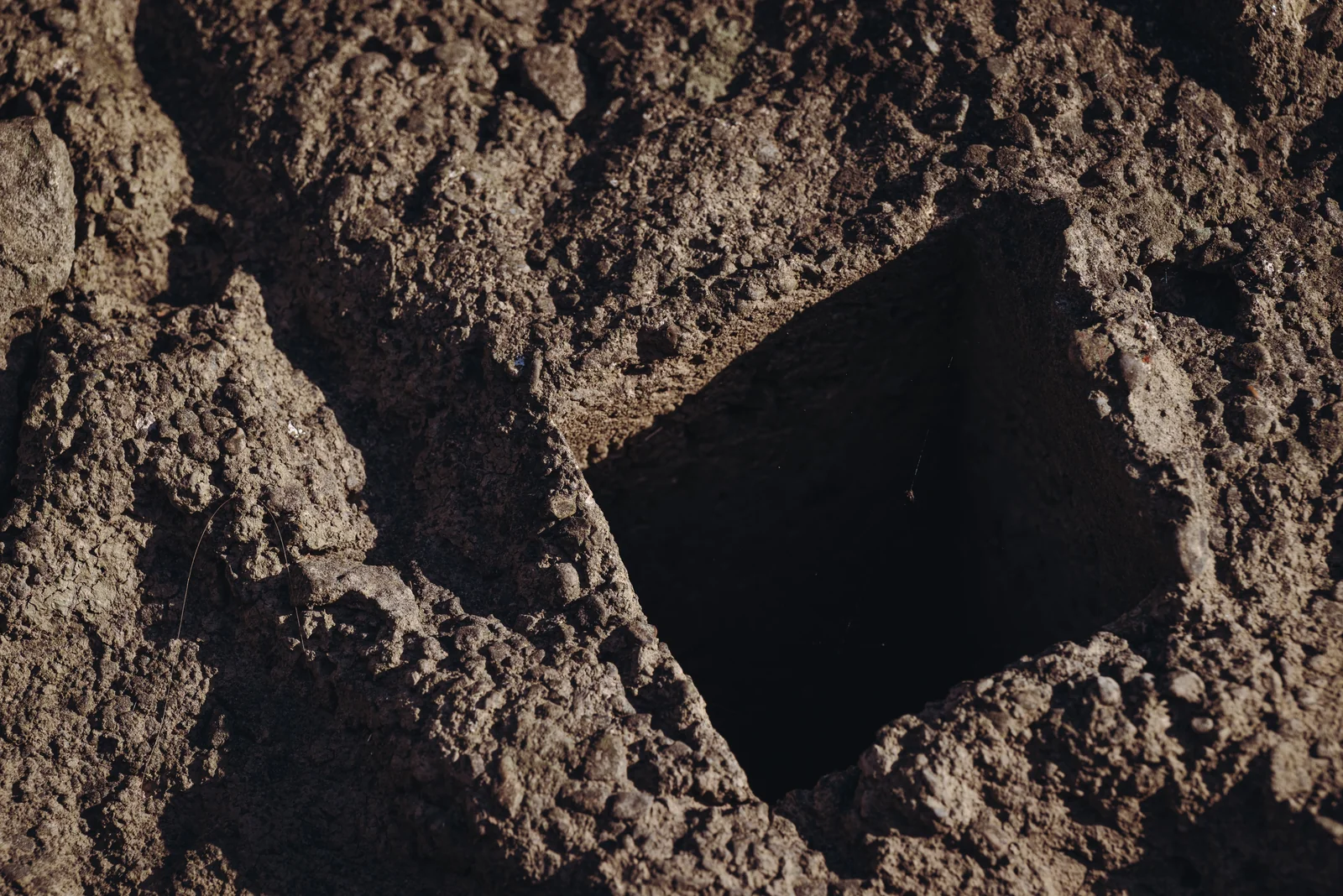
You found a parcel with the view, the acreage, and the quiet you have been looking for. There is no sewer line on the road, which means the home will need an onsite wastewater system. Before you commit to the land or fall in love with a floor plan, you need to know one thing the listing photos cannot tell you: what the soil does with water.
That is the job of a perc test and the soil evaluation that usually comes with it. This guide explains what the test measures, how it works, how the rules differ across Colorado, Utah, New Mexico, and Wyoming, and how the results can shape where your home sits on the land.
The Short Answer
- A perc (percolation) test measures how quickly water soaks into the soil where a septic drainfield might go, usually reported in minutes per inch.
- The result helps decide whether a conventional system can work on that part of the property and how large the soil treatment area needs to be.
- Many jurisdictions now treat a soil profile pit as the main evaluation and use the perc test as a supporting or required add-on, depending on the state and local program.
- A favorable test in one spot does not certify the whole parcel. It describes the ground where it was done.
- Your local health department or equivalent authority, working with a qualified wastewater professional, decides what is approvable on your site.
What a Perc Test Actually Measures
When a home is not connected to a sewer, wastewater typically flows to a tank and then out into the soil, where the ground does much of the treatment. That only works if water moves through the soil at a workable pace. A perc test puts a number on that pace.
The University of Nebraska Extension's guide to conducting a soil percolation test describes the percolation rate as how quickly water moves through soil, measured in minutes per inch. Soils that drain slowly need a larger drainfield to handle the same amount of wastewater, and soils that drain very slowly may not be suitable for a conventional drainfield at all.
Fast is not automatically good, either. Very coarse, sandy, or gravelly soil can move water through before it has been adequately treated. Wyoming's rules, for example, treat soil that drains extremely quickly during the presoak as excessively permeable and send the design down a different path. So the question a perc test answers is not "does the land drain?" It is closer to "does this soil, at this depth, in this location, accept water at a rate a system can be designed around?"
Perc Test vs. Soil Evaluation
You will hear "perc test" used as shorthand for the whole site investigation, but they are not the same thing. The EPA's fact sheet on septic tank and soil absorption systems notes that while some states still use the percolation rate as a suitability criterion, many rely on a broader long-term acceptance rate determined through a full site evaluation that looks at the texture, structure, color, and consistency of the soil layers beneath the drainfield.
In practice, that broader evaluation usually means a soil profile pit, sometimes called a test pit or soil exploration pit. An excavator digs a deeper hole so a qualified evaluator can look at the soil layers directly. The pit can reveal things a timed water test can miss:
- Bedrock or dense, restrictive layers close to the surface.
- Signs of a seasonal high water table, often visible as soil color changes.
- Abrupt shifts in soil texture between layers.
- Coarse gravel or cobble that may drain too quickly.
That is why the perc test and the pit work together. The pit shows what is down there. The perc test shows how the soil at the proposed depth behaves with water. When the two disagree, Colorado's rules point the designer to the more restrictive result, and Utah's call for additional testing to resolve the gap.
How a Perc Test Works
Procedures are set by each state and local program, so the details on your property may differ. The general sequence described in published procedures, such as the Nebraska Extension guide and Wyoming DEQ's Chapter 25 small wastewater standards, looks something like this:
- Locate the likely drainfield area. Tests are done where the soil treatment area is proposed, not wherever is convenient. Many procedures call for several holes spaced across that area.
- Dig and prepare the test holes. Holes are bored to the depth of the proposed absorption system. The sides are roughened so smeared soil does not seal the walls, and a layer of gravel is often placed in the bottom.
- Presoak the soil. The holes are filled with water and kept wet long enough for the soil to reach a steady condition, similar to how it would behave in long-term use. In clay-heavy soil this can take considerably longer than in sandy soil.
- Measure the drop. The tester refills to a set level and records how far the water falls over timed intervals.
- Calculate the rate. The readings become a percolation rate in minutes per inch, which the designer uses with the home's expected wastewater flow and local rules to size the system.
Weather matters too. Wyoming's procedure does not allow tests in holes that reach groundwater, bedrock, or frozen ground, and some local programs restrict soil evaluations when the ground is frozen. If you are looking at mountain land in late fall or winter, ask the local program when testing is realistic before you set a purchase deadline around it.
How Perc Test Rules Differ Across Colorado, Utah, New Mexico, and Wyoming
Majestic Peaks works with clients across a territory that includes Colorado, Utah, New Mexico, and Wyoming, and each state approaches soil testing a little differently. The summary below reflects the state-level rules at the time of writing. Local health departments or other state or local permitting authorities administer these programs and may add their own requirements, so treat this as a starting point for your questions, not a substitute for your county's current rules.
| State | Soil pit or test hole | Role of the perc test | Worth asking locally |
|---|---|---|---|
| Colorado | Two or more soil profile test pits are evaluated as part of the required site and soil evaluation. | May be conducted for additional information. If results conflict with the pit evaluation, the more restrictive long-term acceptance rate is used. | Which local public health agency handles your county and what extra information it requires. |
| Utah | At least one soil exploration pit, as close as possible to the proposed absorption system. | The regulatory authority may require one in addition to the pit, and must require additional testing for larger flows. | Whether your local health department will require a perc test and wants to be present. |
| New Mexico | Test holes may be required to document soil type, limiting layers, and seasonal high water, though they can be waived where conditions are well documented. | Conventional system sizing is organized by soil texture class rather than a timed perc rate. | Whether a test hole will be required on your parcel and how the soil should be classified. |
| Wyoming | At least one soil exploration pit in the proposed absorption area, dug to at least four feet below the bottom of the system. | Delegated local programs must require a perc test, done after the pit is dug and examined, with at least three test holes. | Whether your county runs a delegated program or permits go through the state. |
If you want to read the rules yourself, the primary sources are Colorado's Regulation 43 site and soil evaluation section, Utah's onsite wastewater rule R317-4, New Mexico's liquid waste disposal field sizing rule along with the NMED liquid waste permitting process, and the Wyoming DEQ standards linked above.
What Your Results Can Mean for the Land and the Home
A perc test result is not a simple pass or fail stamp on a parcel. It is one input into what kind of system can work, how big it needs to be, and where it can go. Each of those has knock-on effects for your project.
The system type may change
When soil conditions support a conventional system, the design path is usually more straightforward. When the soil is too slow, too fast, too shallow over bedrock, or too close to seasonal groundwater, a different approved approach may be needed. The EPA's septic systems resources describe a range of system types, and each can carry different costs, maintenance needs, and space requirements. What your property supports is decided through the local approval process, not by which system sounds best online.
The drainfield competes for ground
The soil treatment area, the house, the driveway, a well, and required setbacks between them all need room. On a sloped or rocky parcel, the best soil for wastewater may sit exactly where you pictured the house, or the only workable drainfield area may push the home somewhere with a different view or a longer drive. Majestic Peaks' guide to custom home site feasibility walks through how these pieces fit together on a parcel, and it is worth reading before you sketch a house location.
Home size and layout can interact with the system
System sizing generally depends on the soil and the expected wastewater flow, and many programs estimate flow from the number of bedrooms. If you are deciding between plans, or between an existing Lindal plan and a modified one, that is a useful question to raise early with your wastewater professional so the design and the system are not pulling in different directions.
The budget picture shifts
Testing, system design, permitting, and installation are site costs that belong in your whole-project budget. On the Lindal home system page, the basic package is described as design services, engineered plans, and exterior shell materials, with items like foundation and site preparation outside it. Wastewater should be planned the same way: as part of the total project, with real numbers coming from local professionals once the site is understood.
Questions to Ask Before You Buy the Land
If you are still evaluating a property, the perc test and soil evaluation are some of the most useful information you can gather. These questions help you get it before the decision is locked in:
- Is there an existing soil evaluation or perc test on file? Ask the seller and the local health department. Also ask when it was done and under which version of the rules.
- Where on the parcel was it done? A result near the road does not tell you much about the bench where you want to build.
- Who will do the evaluation? States and local programs set who is qualified to perform and submit soil evaluations and perc tests. Your local health department can tell you what it accepts.
- Can the purchase timeline accommodate testing? Talk with your real estate professional or attorney about how a soil evaluation fits into your contract and due diligence period, especially if frozen ground could delay it.
- Is there room for a replacement area? Some jurisdictions ask whether space should be reserved for a future replacement system. Ask whether yours does.
- Does the area have documented soil information? The NRCS Web Soil Survey can give you an early look at mapped soils, but mapped data does not replace an onsite evaluation or approval.
If you are planning a home that relies on a well and private systems for most of its needs, the off-grid home planning guide covers how power, water, and wastewater fit together on rural land.
Who Does What on a Perc Test
It helps to be clear about roles, because the people involved in your home design are not always the ones who test or approve your soil.
- A qualified wastewater or soils professional performs the evaluation and, in many cases, designs the system.
- The local health department or equivalent authority reviews the evaluation and design and issues the permit.
- An installer who meets local requirements builds the system according to the approved design.
- Your home design team uses the results to place the home, plan access, and keep the design compatible with the approved system area.
Majestic Peaks is not the soil evaluator, system designer, or permitting authority. What a site feasibility conversation can do is help you organize what you already know about the property, spot the unknowns that could change a design direction, and figure out which questions belong with the local health department, a wastewater professional, a surveyor, or an engineer. The building lot evaluation guide is a helpful companion if you are comparing more than one parcel.
Bring the Soil Question Into Your Planning Early
A perc test is a small piece of fieldwork with a big influence on a rural home. It can confirm that your plan is on track, point you toward a different system or house location, or tell you a parcel is a poor fit before you have spent money on design. The earlier the soil question is answered, the more freedom you have to respond.
If you are looking at land in Colorado, Utah, New Mexico, or Wyoming and want to talk through how the site could shape a Lindal home, you can start planning your custom home with Majestic Peaks or call 970 596 7375, Monday through Friday, 8 AM to 5 PM. Share your property location, what you know about it so far, and where you are in the land decision, and the conversation can start from there.