 Your Personal Lindal Representative
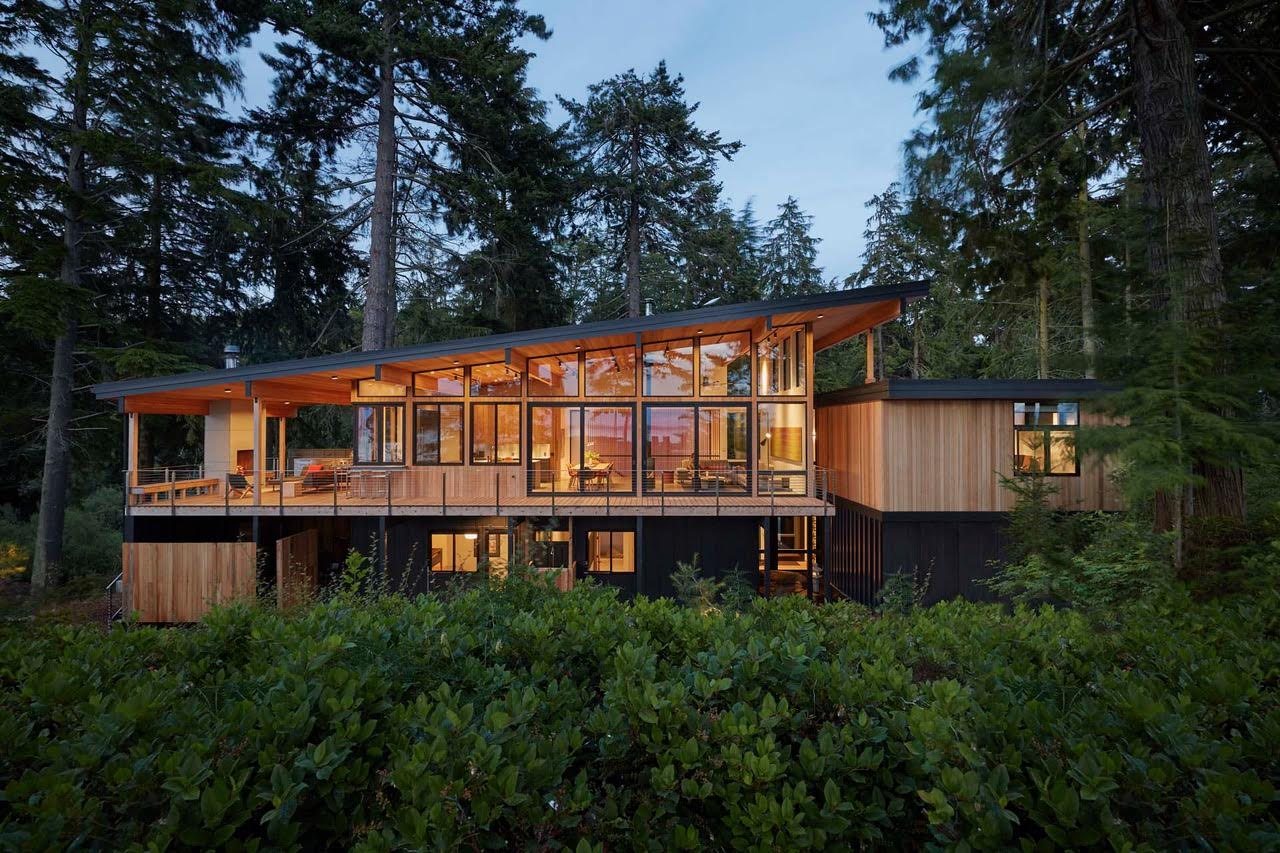
The build vs buy a home question has no universal answer, and the national averages that dominate the search results will not give you one. Those figures describe other people's projects in markets that look nothing like a mountain town or a rural parcel. If you own land, are weighing a piece of land, or need a home the local market does not stock, the real comparison is not a listing price against a rumor of build costs. It is an inherited house that sort of fits, measured against a home designed for a specific site and a specific life.
This guide walks the decision the way a planning conversation would. You will see what to verify before you buy an existing rural home, what building honestly asks of you, how the budget and timing conversations differ on each path, and five questions that usually reveal which path fits.
Quick Answers: Build vs Buy a Home
- Is it cheaper to build a house or buy one?
- No single answer settles the build vs buy a home question. Buying often costs less upfront because the price is visible and set by the market. Building spreads spending across more decisions in exchange for fit and control. Averages cannot answer for your property, your scope, and your market. If you already own land, the comparison changes shape entirely.
- How long does buying take compared to building?
- Buying usually moves you in sooner. Building trades speed for fit: design, permits, site work, and weather-sensitive stages each take their turn. Renovation after closing can stretch a purchase timeline too.
- Should I buy an existing home or build on land I already own?
- Land in the picture reframes the question. A feasibility review of the parcel comes before either enthusiasm or dismissal, because what the land allows, serves, and requires shapes both paths.
- Why do people in mountain markets build when buying looks cheaper on paper?
- Thin inventory forces compromises on layout, light, and how the house meets its site. Many owners conclude the home they want is simply not for sale locally. That is a fit decision before it is a price decision.
- What should I check before buying an existing rural home?
- Well records and water testing, septic records and inspection, insulation and window performance, roof and snow history, wildfire ignition-zone condition, flood status, and year-round access. Each item has a professional who can give a formal answer.
- Does building really give you more control?
- Yes, over design, systems, and materials. The trade is months of decisions and a project role you cannot delegate away. The control is real, and so is the workload.
What "Build vs Buy a Home" Actually Compares When Land Is Part of the Picture
Most build vs buy a home advice is written for a suburban mover: browse listings, or hire a production builder near town. In the mountain West, the question usually arrives with land attached. You may already own a parcel and be deciding whether to build now or buy instead. You may be comparing resale listings against building on land you are still evaluating. Or you may be asking whether the older home you could actually afford supports how you intend to live.
Those are three different situations, and they deserve more than a pros-and-cons list. What they share is a planning core: what the land allows, what the house needs to do, and what each path asks of your money, your calendar, and your attention.
A note on lanes before we go further. Offer strategy, agency, and market timing belong to your real estate professional. Purchase financing and construction financing belong to your lender. What follows covers the planning side of the decision, which is where the two paths genuinely differ. And if a parcel is already in play, a site feasibility conversation comes before either path, because the answers live on the land, not in a national average.
When Buying an Existing Home Is the Right Call
The Honest Advantages
Buying has real strengths, and an honest guide does not bury them. You can typically occupy sooner. You can walk the actual house, stand in its rooms, and feel its light before you commit. Utilities and access already exist, which means they can be inspected rather than imagined. The landscaping is mature, the neighborhood character is established, and the price is visible before you decide.
None of that is a small thing. For many buyers it is the right call, and a fair comparison starts by admitting it.
What to Verify Before You Commit
An existing rural home carries its history in its records and behind its finishes. Before you commit, these are the questions that most often decide whether the purchase still looks good a year later:
- Water. Is the home on a well or municipal supply? For a well, ask about condition, yield history, water-quality testing, and permit records. The EPA maintains a consumer guide to private drinking water wells covering testing and maintenance. A well contractor, a pump installer, or your county or state water office gives the formal answers, and water rights are a separate question from a well permit, answered by the authority that administers them.
- Wastewater. Septic age, the date of the last pump and inspection, drain field condition, and capacity against your household plans. The EPA's septic systems resource explains what records and inspections involve. The septic inspection itself is the formal determination, made by the appropriate inspector.
- Envelope and energy. Insulation levels, window performance, orientation and summer overheating, and electrical panel capacity. A home energy audit, as the Department of Energy describes it, shows you what the house actually does before you own it.
- Structure and site. Roof age and snow history, possible foundation movement on expansive soils, drainage, and grading. Your home inspector, and where warranted a structural engineer, make the formal calls.
- Hazard exposure. Wildfire condition in the home ignition zone, which Colorado State Forest Service checklists are designed to assess; flood status, which you can look up yourself on the FEMA Flood Map Service Center; and steep driveways or seasonal access you will actually have to drive in January.
Then there is floor-plan fit, which checklists tend to miss. Consider a hypothetical. A resale home has the right view and the right price, but a chopped kitchen. You imagine opening one wall to fix it. That wall carries the kitchen, which pulls the windows, which pulls the mechanicals, and suddenly the almost-right house is a renovation project with its own permits, its own trades, and its own unknowns. That is where buy vs build quietly becomes build anyway.
One closing note on this section. The bullets organize questions. The findings are formal determinations made by the appropriate professionals for the specific property.
When Building on Your Land Is the Right Call
Design That Starts with the Site
When you build, fit is designed in rather than hoped for. Orientation and daylight are chosen, not inherited. The basics of passive solar design, which the Department of Energy outlines for homeowners, become early decisions: where the glass goes, what the overhangs do, how the plan absorbs winter sun and sheds summer heat. Views are framed without giving up efficiency. Wind exposure and snow-drifting patterns shape the massing and the driveway. You are not paying to correct a previous owner's orientation decisions, because there are none to correct.
Systems Planned Instead of Retrofitted
The same logic applies inside the walls. Electrical capacity for a workshop or EV charging, plumbing layout, insulation and air-sealing strategy, and wildfire-resistant siting and material choices are decided before framing rather than retrofitted after. The comparison here is structural: planned systems versus layered corrections. Actual energy performance depends on the design, the climate zone, and the code path for your project, which is why this article does not promise performance numbers.
What Building Honestly Asks of You
Design control has a real price, and it is not measured only in dollars. Building asks for months of decisions. It asks you to define roles early: which decisions stay with you as the owner, which go to your designer or plan source, which to engineers, which to your builder, and which to the inspectors and officials who hold approvals. Permitting runs on jurisdiction calendars. Materials need coordination, especially to rural addresses.
Building is a different job, not just a different budget. A planning-led, systems-built route such as Lindal's can organize much of that workload, and choosing a custom-home design path is itself a decision with its own guide. No route makes the decisions for you, and no honest guide will promise a schedule.
Build vs Buy Side by Side
The table below compares structure, not price. Both paths carry unknowns; they just arrive at different times.
| What it compares | Buying an existing home | Building on your land |
|---|---|---|
| Path to occupancy | Offer, inspection, closing, plus whatever repairs you accept | Feasibility, design, permits, site work, weather-sensitive stages |
| What you can see beforehand | The actual finished house | The site, the plans, and the specifications |
| Fit between house and site | Inherited from earlier decisions | Designed around orientation, views, access, and exposure |
| Budget structure | Visible price, unknowns behind walls and in records | Built line by line: design, site work, home package, permits, finishes |
| Energy and systems | Whatever was built, plus retrofits | Chosen and planned before framing |
| Wildfire, flood, and site exposure | Existing condition, some of it retrofittable | Siting and materials decided early |
| Your role | Buyer leading a transaction team | Owner and decision-maker |
The Budget Conversation Is Different on Each Path
On the buy side, the price is visible and the unknowns are hidden. Inspections convert some of them into findings: the roof, the well, the septic, the panel. What inspection cannot reach, you carry as risk, and renovation projects can cascade the way that kitchen did.
On the build side, the structure inverts. Early numbers are a map, not a commitment. A realistic budget conversation builds the project up line by line: design work, site work, the home package, permits, local labor, and finishes each get their own line, and each line carries its own confidence level. A preliminary figure is a planning input, never a project price. What you control as an owner is scope, specification level, and phasing, and a guardrails conversation about those three is more useful than any average. Our custom-home financial feasibility guide walks through that conversation in depth.
Financing deserves one honest paragraph. Purchase financing and construction or land financing are different structures with different requirements, and that conversation belongs with your lender, not with a planning article. The anti-pattern to avoid is the same on both paths: comparing a listing price to a rumor of build costs, or treating either early number as a commitment.
Timing, Seasons, and Mountain Reality
Buying has a transaction timeline, whatever the inspection finds, and renovation afterward runs on the availability of the trades you need. In many mountain towns those trades are booked well ahead.
Building has a sequence: design, then permits and reviews, then site work, then weather-sensitive stages. Foundations at altitude, framing, and delivery on rural roads each answer to the seasons. Some parcels have seasonal access that constrains when heavy work can happen at all. None of this is a schedule; it is a set of dependencies. Our custom-home planning timeline guide covers how to think about sequencing without false precision. Seasonal constraints differ between the Colorado Rockies and the high desert of New Mexico, so treat any sequence as dependent on your actual site and jurisdiction.
How to Decide: Five Questions That Reveal Your Path
- What is the land situation? Owning, holding, or searching changes everything. If a parcel is in play, feasibility comes before either path, because the land can disqualify building entirely or quietly make it the obvious call.
- How much does design control matter to how you will live? Room priorities, light, the threshold to outdoor space, a workshop, room for multiple generations. Ask plainly: would the almost-right house still be almost right in three years?
- What does your timeline tolerate? Buying usually occupies sooner. Building trades speed for fit. Renovation sits between them, and its schedule is not yours alone.
- Which unknowns do you prefer living with? Inspection surprises after closing, or planning estimates refined over months of decisions. Neither path offers zero unknowns; they just distribute them differently.
- How much project involvement do you want? Some owners want to decide every finish. Some want to buy a finished result. Be honest about appetite rather than aspiration.
Common Comparison Mistakes
- Comparing a listing price against a vague sense of build costs
- Treating listing photos and seller disclosures as a condition report
- Assuming water, access, or rights come with a rural parcel without checking records
- Skipping site feasibility because you are only looking
- Treating a preliminary build figure, or a purchase price, as the total project
- Assuming broad service coverage means identical local support everywhere
- Deciding on national averages instead of property-specific facts
Bring the Decision to a Planning Conversation
If the five questions point toward buying, take the win: a home you can walk through, on utilities that already work, at a price you can see. We are not the right stop for evaluating a resale listing; your home inspector and your transaction professionals are. The guides linked above will still help you shop with sharper questions.
If they point toward building, or if you are sitting on land you have not yet tested, that is the conversation we do have. To request a site and design consultation, bring what you have: the parcel location and any documents such as a deed or plat, a well permit, or septic records; photos; your home priorities; the budget guardrails you are comfortable sharing; how your timeline feels; and the one question that feels most uncertain. If you already know you want to build, the next decision is which build route, and our custom home vs production home comparison covers that choice in detail.